


Best Webflow Templates for Property Management Companies in 2026
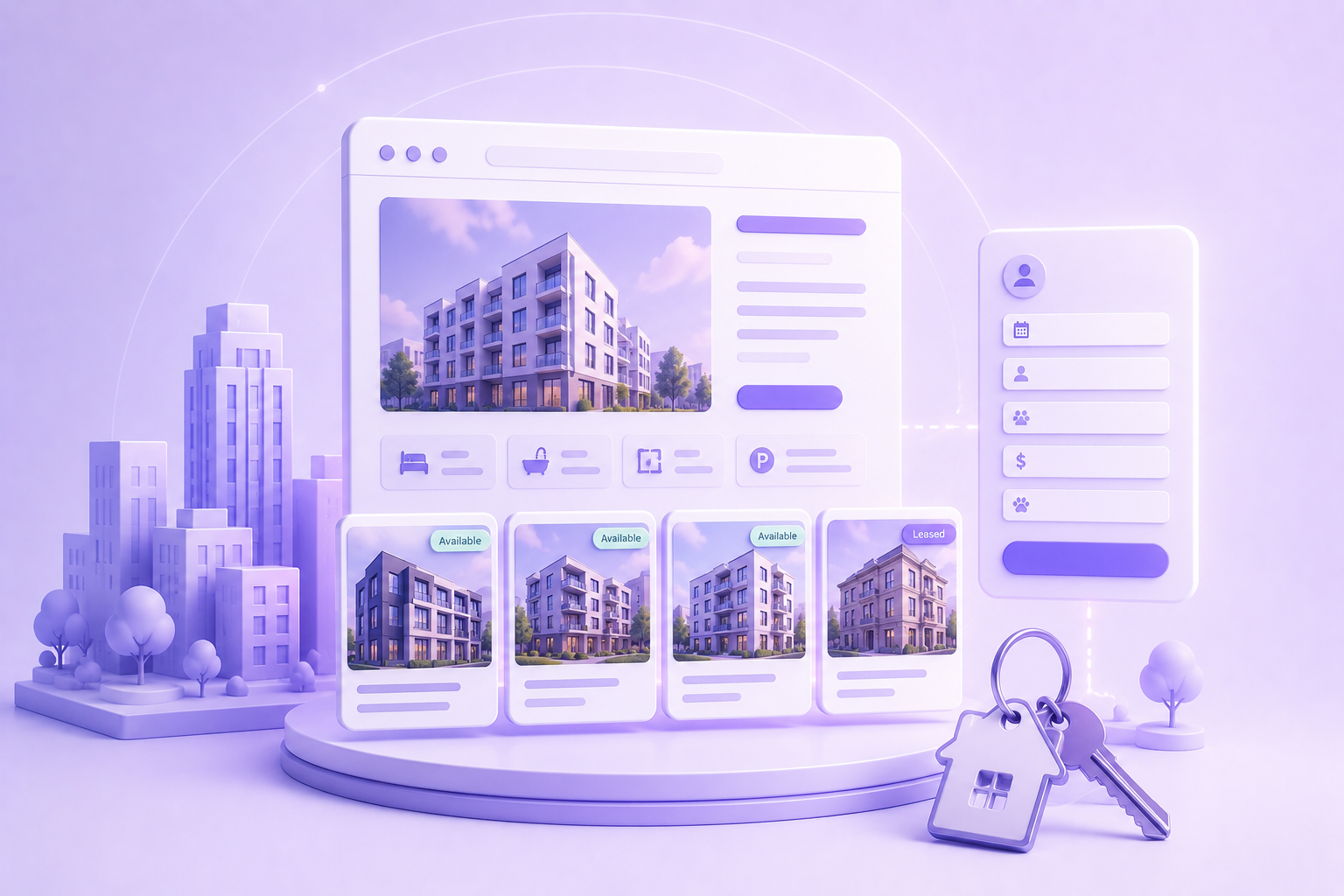
Property management companies have a website problem that most real estate templates do not solve: they need to present multiple properties — each with its own availability, pricing, floor plans, amenities, and inquiry path — without building a separate site per property or hiring a developer every time a new unit type goes live. Generic real estate templates are built for agents selling individual properties. They are the wrong architecture for a property management company operating a portfolio.
This guide covers what a property management company website actually needs in 2026, why the template architecture matters more than the visual design, and which Webflow templates are built for this specific use case.
What does a property management company website need that generic templates miss?
A property management company website needs three structural elements that generic real estate templates rarely include: a CMS-powered property portfolio where each property has its own page with unit types, pricing, availability, and floor plans; a renter-facing inquiry flow that captures prospect details and qualifying information before the first conversation; and a company credibility section that communicates management experience, portfolio scale, and contact process. An agent's template focuses on individual property showcasing with a single inquiry form. A property management company's template needs to present a catalogue of properties, each with enough detail for a renter or investor to self-qualify, and a back-end CMS architecture a property manager can update without developer involvement.
The three structural gaps that most generic templates leave:
1. CMS property catalogue without individual property pages. Many real estate templates show a grid of properties but treat the grid as static content — images and text placed manually, not CMS items. When a property becomes unavailable, when pricing changes, or when a new building is added, the team has to edit the design layer. A property management company updates listings frequently. The CMS must handle this without Webflow Designer access.
2. No unit-type or floor plan hierarchy. A property management company does not have one property — it has multiple properties, each with multiple unit types (studio, 1-bed, 2-bed, penthouse). The information architecture needs to accommodate this: a properties directory, individual property pages, and unit type breakdowns within each property. Most templates collapse this into a simple gallery.
3. Generic contact form instead of a structured inquiry flow. A name-and-message form produces unqualified leads. A structured inquiry form that captures move-in date, preferred unit type, number of occupants, budget range, and pet situation produces qualified leads that a leasing team can act on immediately. Property management operations that deploy structured forms report significantly higher lead quality than those using generic contact fields (AppFolio Property Manager Survey, 2025).
What is the best Webflow template for property management companies in 2026?
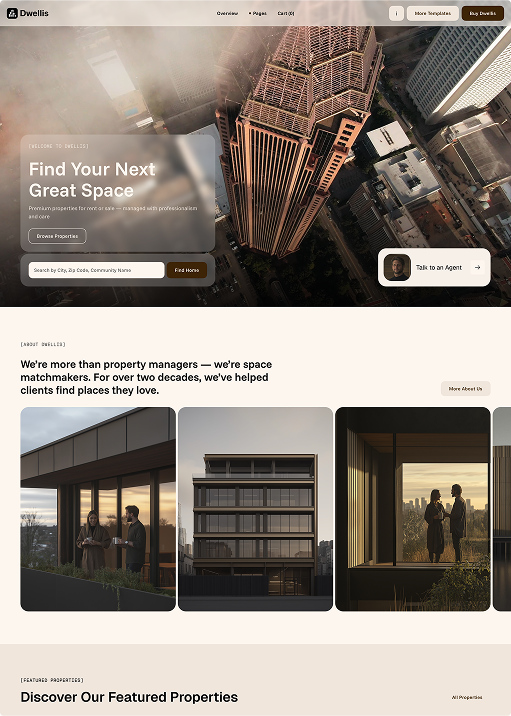
Dwellis by Loonis is the strongest Webflow template for property management companies in 2026 — 23 pages built specifically for teams showcasing diverse property portfolios, with CMS-powered property listings, multiple layout variations for different property types, neighbourhood content sections, and a renter-focused inquiry flow. At $169 with a Figma source file included, it is purpose-built for the portfolio management use case rather than adapted from an agent template.
What makes Dwellis work for property management specifically:
CMS property portfolio. Each property in the portfolio is a CMS item with its own page. Adding a new building, updating pricing, marking units as unavailable, or uploading new photography are all handled through Webflow's content editor — no Designer access required. A leasing coordinator or marketing coordinator can manage the portfolio day-to-day without a developer.
Multiple property layout variations. Dwellis includes layout variations designed for different property presentations: multi-family residential, urban apartment buildings, mixed-use developments, and student housing. Not every property in a management portfolio looks the same, and the template accommodates this without forcing every listing into the same visual structure.
23 pages covering the full property management site structure. Homepage with portfolio overview and availability signal, individual property pages with unit types, floor plans, amenities, and inquiry form, neighbourhood or location content pages, team and company page, and a contact page with a structured inquiry flow. This is the full structure a property management company needs at launch, not a starting point that requires 10 new pages to be built.
Renter-focused design. Dwellis is designed around how prospective renters evaluate and select properties — high-quality photography front and centre, pricing transparency, availability status visible without inquiry, and floor plans accessible directly from the property page. The conversion architecture is built for renter decision-making, not for property sales.
Figma source file included. Useful for operators with an in-house designer or brand consultant who wants to adapt the visual system before building in Webflow. Sent within 1–2 business days of purchase on request via hello@loonis.co.
See Dwellis live preview | Get Dwellis — $169
How does Dwellis compare to a single-property template like Terris?
Dwellis and Terris serve different property management needs. Dwellis is built for operators managing multiple properties or multiple unit types — the CMS architecture accommodates a catalogue. Terris is built for showcasing a single boutique property or a small residential community with one primary brand identity. Choosing the wrong one costs weeks of restructuring work after launch.
The practical decision:
Choose Dwellis if: you manage 3 or more distinct properties, your portfolio includes different building types (apartments, townhomes, commercial units), you need filtering or browsing across multiple listings, or your business presents itself as a management company rather than a property-specific brand.
Choose Terris if: you are marketing a single property, a boutique rental community with a unified brand, or a development where the location and lifestyle of one property is the primary story. Terris is built around a deep single-property presentation — floor plan gallery, neighbourhood guide, development team, and a project-specific inquiry flow.
The most common mistake: property management companies with a small portfolio (three to five properties) choosing Dwellis expecting it to handle single-property depth. For portfolios under three properties where the goal is rich presentation of each individual property, Terris often converts better because depth per property outperforms breadth of catalogue when inventory is limited.
What does a property management company website need to convert renters in 2026?
A property management company website converts prospective renters when it answers four questions before an inquiry: what properties are available right now, what are the specific unit types and pricing, what is the neighbourhood like, and how responsive is the management team? Renter expectations in 2026 have shifted toward self-service discovery — most prospects qualify themselves against available inventory before ever contacting the leasing team.
<cite index="49-1">According to Dwellis's own published case studies, property management CMS systems that allow real-time updates to pricing and availability are the single most-requested feature from leasing teams.</cite> The four conversion elements every property management site needs in 2026:
Real-time availability signalling. The single most common reason a qualified prospect does not convert is discovering at the inquiry stage that the unit type they wanted is unavailable. Showing availability status directly on the property page — without requiring contact — reduces inquiry drop-off significantly.
Pricing transparency. According to Zillow's 2025 Renter Survey, 73% of renters say transparent pricing is the most important factor in evaluating a rental listing online. Properties that require prospective tenants to "contact us for pricing" convert at 30–40% lower rates than those that display pricing directly (AppFolio, 2025).
Neighbourhood and lifestyle content. A renter is not just choosing a unit — they are choosing a location. Local transport, nearby amenities, walkability, and community character content on the property page keeps the prospect engaged beyond the floor plan and reduces the number of pre-inquiry questions the leasing team has to answer.
Structured lead capture. A structured inquiry form that collects move-in timeline, preferred unit type, budget, and occupant count gives the leasing team everything they need to qualify the lead before the first phone call. This reduces unproductive inquiry processing time and improves lead-to-lease conversion rates.
Dwellis includes all four content structures as native template sections — availability indicators, transparent pricing fields, neighbourhood content pages, and a multi-field inquiry form.
How much does a property management company Webflow website cost in 2026?
A property management company website built on Dwellis costs $169 (template, DIY) to $2,464 (template plus Loonis Launch & Grow done-for-you service with 3 months post-launch support). Custom property management websites from agencies typically cost $10,000–$40,000 and take 8–16 weeks. For most property management companies, the template-plus-customisation path delivers professional credibility and full CMS functionality at a fraction of the custom build cost.
Total first-year cost breakdown:
- Template only (DIY): $169 + Webflow hosting $23/month = approximately $445 first year
- Template + Loonis Pro ($1,495, 5-day delivery): $1,664 total first year
- Template + Loonis Launch & Grow ($2,295, 5-day delivery + 3 months support): $2,464 total first year
- Custom agency build: $10,000–$40,000 + 8–16 weeks delivery
For a property management company with a portfolio generating $500K–$5M in annual rental income, a $2,295 website investment that improves lead quality or converts one additional qualified renter per month pays for itself within weeks. The question is not whether a professional, well-structured website is worth the investment — it is whether DIY, done-for-you, or a custom build is the right path.
Start with Launch & Grow — $2,295
If you want to configure the template yourself, Dwellis is built so that day-to-day property management — updating availability, adding new units, editing pricing, uploading photography — is handled through Webflow's content editor with no design layer access required.
Frequently asked questions
What is the best Webflow template for a property management company in 2026?
Dwellis by Loonis is the strongest Webflow template for property management companies managing diverse property portfolios in 2026. It includes 23 pages, CMS-powered property listings where each property has its own page with unit types and pricing, multiple layout variations for different property types, neighbourhood content sections, and a structured renter inquiry flow. $169 with Figma file included. Best for operators managing 3+ properties or multiple unit types.
Can a property management company update its Webflow site without a developer?
Yes. Dwellis is built with a non-technical property management team in mind. Adding new properties, updating unit pricing and availability, uploading photography, and publishing blog posts are all handled through Webflow's content editor — no design layer or developer access required. For ongoing AEO, content management, and site updates after launch, Loonis Growth Plans cover this from $149/month.
What is the difference between Dwellis and Terris for property management?
Dwellis is built for property management companies with multiple properties — its CMS architecture handles a portfolio catalogue with individual property pages, multiple unit types, and filtering across listings. Terris is built for showcasing a single boutique property or residential community with rich depth per property. Choose Dwellis for portfolio management; choose Terris for single-property or boutique community presentation.
How much does a property management company website cost in 2026?
Dwellis template: $169 + $23/month Webflow hosting = approximately $445 first year (DIY). With Loonis Pro customisation (5-day delivery): $1,664 total. With Launch & Grow (5-day delivery plus 3 months support): $2,464 total. Custom agency builds for property management sites: $10,000–$40,000 over 8–16 weeks.
What pages should a property management company website include?
A property management company website needs: a properties directory homepage with availability overview, individual property pages with unit types, floor plans, pricing, and availability status, a neighbourhood or location content section per property, a company or team credibility page, a structured inquiry form that captures move-in timeline and unit preferences, and a blog for local SEO and renter resources. Dwellis includes all of these across 23 pages with CMS architecture for the content that changes regularly.
The bottom line
A property management company website is not a real estate agent's website. The architecture is different because the business model is different — multiple properties, multiple unit types, frequent availability changes, and a renter audience that self-qualifies before contacting the leasing team.
Dwellis is $169 with a Figma source file and covers the full 23-page structure a property management company needs at launch. Loonis Launch & Grow delivers it fully configured, branded, and CMS-populated in 5 business days for $2,295.
If you are still deciding between Dwellis and Terris, the Launch Plan Builder quiz recommends the right template based on your portfolio size and property type in under 3 minutes.





%20(1).png)

